
BRCGS Issue 9 certification made audit-ready, from HACCP to traceability
Meet the BRCGS Global Standard for Food Safety with digital HACCP record-keeping, controlled records and instant traceability that stand up to unannounced audits.
Turn BRCGS from a scramble into a system
Keep HACCP plans, monitoring records and traceability live all year, so your next BRCGS audit is a formality rather than a fire drill.
See PricingNo credit card required · 30-day free trial · Live in 4 weeks
What is BRCGS?
The BRCGS Global Standard for Food Safety, now in Issue 9, is a GFSI-recognised certification for food manufacturers, processors and packers supplying retailers, foodservice and brand owners. Published by BRCGS (Brand Reputation Compliance Global Standards), it sets the requirements a site must meet to demonstrate safe, legal, authentic food production. Certification is expected across UK and EU supply chains, and many customers make it a condition of doing business.
Certification is assessed by an accredited third-party certification body against fundamental requirements plus nine sections covering HACCP, management systems, site standards, product and process control and personnel. Auditors grade the site (AA to D) based on the number and type of non-conformities, and many sites now sit on an unannounced audit programme. Certificates are typically valid for a year, with corrective actions closed out within tight deadlines.
How Q-Hub maps to the BRCGS requirement sections
| Requirement | What BRCGS expects | How Q-Hub helps |
|---|---|---|
| 1. Senior management commitment | Demonstrable leadership commitment, a food safety culture plan, defined objectives and management review with documented actions. | Company KPIs and dashboards give leaders live visibility of food safety performance, while Document Hub holds policies, objectives and management review records with approval trails. |
| 2. The food safety plan (HACCP / Codex) | A HACCP study based on Codex Alimentarius principles, with hazard analysis, critical control points, monitoring and validated limits. | Register Hub holds the hazard analysis and CCP register, Document Hub holds the HACCP plan and critical limits, and Smart Forms capture monitoring records at each control point with photo evidence, while CAPA logs corrective actions when a record shows an issue. |
| 3. Food safety and quality management system | Controlled documents, internal audit programme, complete traceability, supplier approval and management of non-conformity. | Document Hub controls procedures and records, Audit Hub runs the internal audit schedule, and traceability plus supplier records are held in Register Hub for fast mass-balance exercises. |
| 4. Site standards | Suitable fabrication, hygienic layout, cleaning, pest control, maintenance and waste management across the site. | Smart Forms digitise hygiene and pre-operational checks, Asset Hub schedules maintenance and calibration, and CAPA tracks pest control and cleaning findings to closure. |
| 5. Product control | Management of allergen information, product design and labelling control, claims verification and routine product testing. | Register Hub holds allergen information registers, Document Hub keeps controlled specifications and labelling records, and Smart Forms capture product testing results and label verification against a controlled specification. |
| 6. Process control | Documented control of operations, in-process monitoring, quantity checks and calibration of measuring equipment. | Smart Forms capture in-process monitoring and quantity checks on mobile, Asset Hub keeps measuring equipment calibrated, and CAPA logs corrective actions where a record shows a deviation. |
| 7. Personnel | Training and competency, personal hygiene, protective clothing and controlled access for staff, contractors and visitors. | Training Hub holds competency matrices, training records and certification expiry alerts, and Smart Forms record hygiene, protective-clothing and induction checks. |
Competitor pricing as published by each vendor. Figures marked ≈ are converted from the currency they were published in at today’s rate, for comparison only.
Ready for every BRCGS audit, announced or not
BRCGS audits are detailed, evidence-hungry and increasingly unannounced, so records must be complete and current every day. Q-Hub keeps HACCP records, traceability and corrective actions current, so evidence is one search away.
Complete HACCP records
CCP and prerequisite checks captured on mobile with photo evidence, so critical control point records are complete and always audit-ready.
Traceability in minutes
Trace ingredients, batches and finished product forwards and backwards from one register, so mass-balance exercises take minutes, not hours.
Controlled documents
Every procedure, specification and record is version-controlled with approval trails, so auditors always see the current, authorised copy.
Corrective actions closed
Non-conformities raise a CAPA with root cause, owner and deadline, so audit findings are closed out and verified within the required timescales.
Digital HACCP and food safety plan management
Build your Codex-based HACCP plan in Q-Hub and connect it to daily record-keeping. Register Hub holds the hazard analysis and CCP register, Document Hub holds the HACCP plan and critical limits, and Smart Forms capture monitoring records at each control point, prerequisite programmes and process checks on the shop floor. When a record shows a deviation, CAPA logs the corrective action, so issues are captured and controlled rather than discovered at audit.
- Codex-based HACCP plan and hazard analysis held in controlled documents and registers
- CCP and prerequisite monitoring records captured on mobile with photo evidence
- CAPA logs corrective actions when a record shows a deviation or missed check
- Live dashboards show record completion across every line and shift
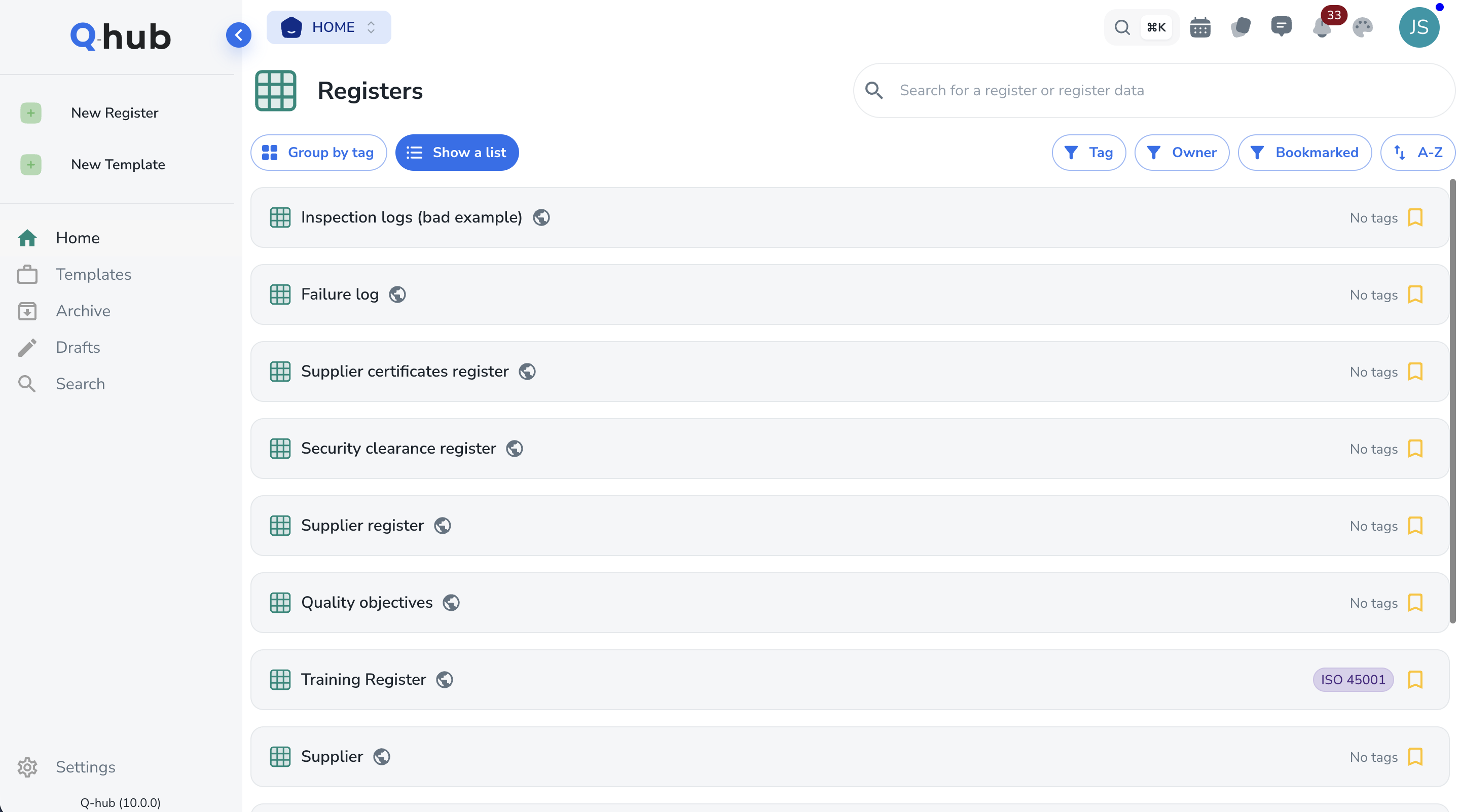
Document control, traceability and corrective action
BRCGS lives or dies on records. Document Hub keeps procedures, specifications, labelling records and completed records version-controlled with full approval trails and controlled distribution. Traceability and supplier data sit alongside in Register Hub, and any non-conformity raises a CAPA with root cause analysis and effectiveness checks, so corrective actions are closed out and evidenced well inside BRCGS deadlines.
- Version control and approval workflows for every procedure and specification
- Forward and backward traceability with rapid mass-balance evidence
- Supplier approval and monitoring records held against each supplier
- CAPA with root cause and effectiveness checks to close non-conformities







BRCGS certification timeline with Q-Hub
Gap analysis & setup
Map your site against Issue 9 fundamental requirements and nine sections, then configure Hubs, registers and forms to close the gaps we find.
Build HACCP & documentation
Digitise the HACCP plan, procedures, specifications and monitoring forms in Q-Hub, with controlled distribution so everyone works to the current version.
Internal audit & readiness
Run the internal audit programme in Audit Hub, close findings through CAPA and confirm records, traceability and training are complete before your assessment.
Certification & maintenance
Support your accredited BRCGS audit with evidence on demand, then keep monitoring, records and actions live all year for announced or unannounced re-audits.
Ready to simplify BRCGS compliance?
See how Q-Hub keeps HACCP records, traceability and corrective actions audit-ready every day, so your next BRCGS assessment is calm and well evidenced.
See PricingNo credit card required · 30-day free trial · Live in 4 weeks
BRCGS FAQs
BRCGS awards a grade based on the number and severity of non-conformities raised at audit. Grades run from AA and A (few, minor issues) down through B and C to D, with unannounced audits carrying a plus (AA+, A+). No critical or major fundamental non-conformities are allowed for certification. Q-Hub helps you protect your grade by keeping evidence complete and corrective actions closed before the auditor arrives.
Sites can opt for, or be placed on, an unannounced audit programme where the certification body arrives within an agreed window without a booked date. This proves standards hold every day, not just at a planned audit. Q-Hub keeps HACCP records, hygiene checks, traceability and other evidence complete and current, so an unannounced BRCGS auditor finds the same complete evidence at any time.
The food safety plan in Section 2 must be a HACCP study built on Codex Alimentarius principles, covering hazard analysis, critical control points, validated critical limits, monitoring and corrective action. In Q-Hub, Register Hub holds the hazard analysis and CCP register, Document Hub holds the HACCP plan and critical limits, Smart Forms capture monitoring records at each control point on mobile, and CAPA logs corrective actions when a record shows an issue.
Product control (Section 5) requires you to handle allergens robustly: risk assessment, controls to prevent cross-contamination, validated cleaning and accurate labelling of allergenic ingredients. Q-Hub holds allergen information registers in Register Hub, keeps controlled specifications and labelling records in Document Hub, and Smart Forms capture allergen cleaning verification records, so declarations stay accurate and evidenced.
For a prepared site, expect roughly three to six months from gap analysis to certification, depending on the maturity of your existing system. Time goes into building the HACCP plan, documentation and monitoring, then running an internal audit before the assessment. Q-Hub shortens setup by digitising documents, forms and traceability, so readiness comes faster and stays maintained year on year.
Q-Hub maps to all nine BRCGS sections: Register Hub holds the hazard analysis and CCP register, Document Hub controls the HACCP plan, records and traceability, Smart Forms capture monitoring records, Audit Hub runs internal audits, Training Hub manages competency, Asset Hub schedules calibration and maintenance, and CAPA closes non-conformities. Live dashboards give leadership the visibility Section 1 expects, keeping the whole site audit-ready every day.