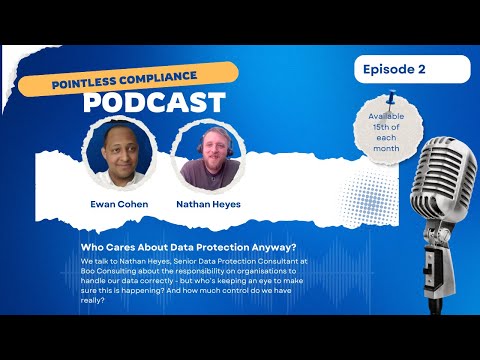

Pointless Compliance: Net Zero, What's the Point? With Zoe Detko
 Hosted by Ewan Cohen · with Zoe Detko
 Zoe Detko, a low carbon specialist, discusses how businesses can develop strategic carbon reduction plans that balance environmental impact with business viability. The conversation covers emissions counting methodology (scopes 1-3), the importance of bespoke approaches over one-size-fits-all solutions, and how businesses can move beyond compliance to genuinely reduce emissions while improving profitability and market position.
Transcript
Climate change doesn't exist, it's not a thing. Cool. That consumerism should stop, that capitalism should stop. Sure, they are not going to. Net Zero is here to stay. We need to move away from using petrol and diesel. I have a seven-seater diesel vehicle. I'm not saying I'm for or against EVs. No reason to get rid of it.
But there's lots of reason to have it. It needs people to buy into it, to invest in it as a technology. Am I really doing my part?
This afternoon we are joined by Zoe Detko. So Zoe, you're described on LinkedIn as a low carbon specialist, speaker, founder at AIA Eco Innovation. So tell me a little bit about you. What does that cover?
Yeah, I am a low carbon specialist. So my role is my job, my life, my company, my business is to help businesses reduce their emissions. So I go in, we look at what is business as usual, then we can kind of count their emissions through the different business practices that they do, and then we look at how we can reduce that. So we look at what's right for them. So I kind of, you know, there's a lot of tools on the marketplace at the moment that count carbon, but I think you know it needs more to really make impact and change. You need more of a bespoke kind of approach. We're looking at different ways of reducing your emissions. You know, we're looking at your business and what your business priorities are for your business to function sustainably and to kind of keep going but do better along the way. And that's where I do that. Speaking, I do love to stand up in front of people and talk about what I'm passionate about.
Yeah, well, you're doing today. Thank you. Yes, yeah, yeah. I love to be on a panel, love to be on a podcast. I love just any kind of conversation about it because, you know, I think it can be quite a dry subject, and you know, it gets, I would say, lumped in with compliance, you know, however you take that. But it is actually, you know, for the better of the world. You know, we're trying to do good. We're trying to do things that are better. So I like to try and get in front of people so that they can just visibly see my passion and see why I care, and hopefully that then inspires them to do that too, to care. And yeah.
Excellent. I mean, your passion does come through. I mean, you can hear it in the way you kind of talk about it. Have you always been so? I mean, you know, did you come out of the womb sort of talking about Net Zero and carbon? And is there something that came to you? Because you're a PhD graduate, I guess. So tell me a little bit about that. What was your PhD in?
So I talk a bit about how I got there as well because I think the story is a bit of a flow. So I kind of went and did A-level geography, loved it, and that's what I got my best grade in at A-level. So I was like, well, let's see what that does. And then looked at the program and it had the most field trips out of any other degree program. So like, yes please, I'll have that. Which, you know, it's kind of goes against the grain of trying to reduce emissions, flying to Belize, to work in the jungle there. But I did go to Belize and we're in the jungle and something that happened was quite a bit of a moment for me.
We were walking through the jungle and there were these kind of palms and people were illegally coming through to Belize and stealing these palms because they're very valuable in forest floristry. So what we did was whenever we walked past one, we just put our finger through it because it didn't hurt the plant, it didn't hurt the ecosystem, but it made it completely invaluable to people coming in and stealing it.
Put your finger through in what sense?
The palm. Just the palm. So like, it was not perfect anymore.
Oh, I see. Okay. Yeah, the branch. Yeah. Okay. Yeah.
And so because when they were coming in and stealing these things, they were doing a lot of other damage along the way to the ecosystem and, you know, driving over things. And you know, so they were trying to discourage it happening. So it didn't damage the plant at all, but what it did do was make it invaluable. So it kind of then highlighted, for the first time, that the law and how the environment is treated as a commodity, how you know that sort of stuff was kind of sparked to be then.
So then I got home, had to do my dissertation and chose to do that on neonicotinoids in bees because that was very big at the time. So you're gonna have to tell us, okay, what does that word mean?
So neonicotinoids are a type of fertilizer that is harmful to bees. So they were going through the process of being banned at the time. So I did my PhD thesis—not my PhD, my undergraduate thesis—on that. And then that led me to a master's in conservation biology with zoo studies. Again, more field trips. And ultimately, after finishing that, I got a real job out of academia, but decided that actually I wanted to kind of go back and study a bit more. So hopped on to find a PhD dot com. And there was this PhD there that was just written. It's a real website.
Oh, is it? Okay.
Yeah. And you know, and I hopped on there and there was a PhD program looking into how we integrate the environment into planning and policy decisions. And you know, just reading it through, it felt like it had been written for me. It was just, you know, incredible. So off I went to Cranfield to study that. That took four years in the end. And I spent a bit of time in Westminster in the process of doing that at the government office for science, which was really fun. And yeah, so my PhD, what we did was we looked at the kind of scales at which we integrate the environment into planning of policy decisions and what impact that has. And it was focused entirely on ecosystem services. So the way that the land and the earth kind of functions in ways that it helps us survive on it. You know, just from pollination to carbon sequestration to flood management, you know, the things that the planet just does that we need it to continue doing.
So yeah, I did that and then absolutely loved it. And carbon sequestration and carbon emissions kind of piqued my interest a lot. And then I managed to get a role when I moved up to Lancaster, which is where I live now, at Lancaster University, looking at helping businesses reduce their emissions through research and development programs. So I did that for six years. And that was EU funded, so that came to an end. And at that point, I decided to kind of spin off and make my own business out of counting emissions and helping businesses reduce their emissions.
That's no, no, excellent. I think, yeah, quite a testament to kind of following something you're interested in. And I mean, even though you were saying, you know, field trips and so forth, as good a reason as any to start a project of study, but eventually you find your niche, isn't it? And you find something you're passionate about.
I think that's yeah. You know, I'm having a few discussions with youngsters leaving school and going into A-levels, and you know, they've got no idea what they want to do. You know, one said to me the other day, "I want to work in an office," and it's like, yeah, but what does that actually mean? Why would you want to do that?
Yeah, yeah, you know, that's not a job title or anything. But yeah, and then I felt kind of bad saying, like, you know, what are you good at? And what do you have a passion for? And go and explore that. Because sometimes maybe people, it can lead people down a path which, you know, everybody wants to have a life where you can afford a few nice things and holidays and that kind of thing. So you've got to have some goals with you. You know, work's not always fun, and it's finding that balance. But it seems like you've come out good in the end. So that's really, yeah.
Yeah, yeah, absolutely. I absolutely love what I do and I get to do it every day, and the worst thing about it is my boss. Really, but that's me.
Yeah, yeah, that's good. That's good. You sound like a not-too-bad boss to work for. So what's your typical week then? So I suppose you're in company helping them with this carbon challenge. Do you have a typical week? Are there common themes that you go down with different companies?
Yeah, I do. There definitely are some common themes. So I'm based in Lancashire and we're very lucky that the local councils have kind of clubbed together to support a chamber of commerce program for helping businesses calculate their emissions. And I do a bit of work for them. So I kind of get to go to some incredible manufacturing sites in Lancashire like the things that we make in Lancashire are just mindblowing, where they're sent to and the things that we're leaders on in the world in these tiny little factories, you know? It's just the things you see are amazing, and the people you meet as well. Like I absolutely love going to these sites, and you know, people that have worked there for their whole career in these manufacturing sites and you know started on the shop floor and worked their way up, and it's just, yeah, I feel really lucky that I get to do that.
But you know, manufacturing is very often very carbon intensive, so they're real challenge, and they're fun because the harder it is, the more fun it is. Surely? I think everyone says that, don't they?
And you know, I don't think so. And yes, we get to go in and yeah, just look at what they're doing and what they're, you know, it leaves back to that kind of bespoke thing. Is there isn't a kind of one-size-fits-all? Oh, we'll go and have a look, oh, you should do these ten things that are the same ten things that the manufacturing site down the road are doing? Because it's not true, and it's not applicable, because the way your business operates has stemmed from it being either market-led or it's been how you started, or you know, and it's just so incredibly different from the site next door that you, we need that site visit for these ones to really understand where the emissions are and how they function.
So yeah, I spend, I'd say, a couple of days a week in a manufacturing site somewhere in Lancashire, which I love. And then I do a lot of carbon reduction plans for you know, for NHS supply chain companies. So that includes you know getting together a lot of their data, so that scope one emissions, scope two emissions, and then subset of five of their scope three just to get them compliance, to make sure that they can still tender on the NHS. I do a lot of that. And then I do a lot of—I love, you know, I said this at the beginning—I love to speak. I love to try and get on panels and in front of people because, you know, it's what I love to do. Like I saying day I find you know networking quite tricky, face to face. Like I don't love it. I can't approach people. I'm not like this super outgoing person, but one-on-one, no thank you. I really struggle with that. But I can stand up and talk in front of a room of five hundred thousand people absolutely fine, like no problem. And so I like to try and be on these panels and things in order to try and get my message across and how passionate I am about the subject, in kind of hope that either people will come to me or that they have something that's resonated with them, and then kind of we connect down the line and work together like that.
So I think that's always the part of running a small business: you've got to do that bit of marketing as well.
Yeah, but it's a difficult balance sometimes, yeah?
Yeah. But Net Zero has kind of come into the forefront, particularly I think into people's minds and, you know, into marketing and into, you know, that sort of stuff in the last maybe six to seven years, with the last two or three being a real push on it as a term that people are using. So companies often engage with me at the point of needing to be compliant. Ultimately, I'd say that's where maybe 75% of my clients come in. And I don't mind that. I think that's fine because, you know, sometimes it's not on your radar, and as you know, someone running a business myself, you know, you do what you have to do to kind of get by. And then when there's a thing that comes up, then we start working on it, and that makes absolute sense to me.
Because ultimately your business needs to be sustainable in order to be, you know, sustainable. You know, you need to be able to work for the environment and do good things, but you need to then, you know, also be a successful business and be able to keep maintaining that. So yeah, people come to me when they need to be compliant. And what I try and do then is win them round by being, you know, passionate and excited about the subject. You know, I'll try and work out what they're passionate about in their business and where they can make change that is actionable and measurable and is something that they can really get into, rather than just being like, "Oh, you know, you should tell everyone to turn the lights off. You should get your sales reps Teslas instead of" you know, whatever they've got. You know, because prioritizing EVs can reduce emissions, but it might not be what's the best thing for your business. So it's about finding those things that will have real impact but will also get everyone engaged.
So yeah, they come to me for compliance mostly. The ones that don't, the ones that come to me just because they are, they're the ones that are kind of really, I love working with them. And often they have an idea of what they want, and they're coming just to kind of be sure that it's the right way and just to put the numbers behind it to make sure that, you know, if they're spending x amount of money doing something to reduce emissions, it's actually going to give them the results that they need. And yeah, so they're fun as well to work with because they often have quite a bit of passion about it as well. So we kind of rub off each other.
No, it sounds good. And do you find that from particular industries? I suppose some are going to be more passionate and more productive than others, or at least I'd assume. Is that the case or no?
Like I'd absolutely, from my experience, obviously I've only been doing this for 18 months as a business, but from my experience, it is a wide breadth of businesses that want to just do it. And it's more about the person and that person's values rather than the industry. So, you know, I've got a client who has a travel company. Her goal for the business was to work with hotels and travel providers that were already engaging with this agenda, and that was, you know, part of her project. And then she wanted to offset as much as to offset the emissions but also as a kind of a piece to highlight that this is the amount of emissions from travelling and from going on these holidays, and this is what happened. So just as a way of communicating that, enforcing the offset as part of the project, and that was a really fun one to work on.
And then yeah, digital marketing companies. They want to kind of have it as an offer for their clients. You know, let's count the emissions from this digital marketing strategy, and then let's try and see what we can do about it and bring them down for next time. And you know, the ones that are doing stuff like that are often the ones that are wanting to shout about it. They're wanting to, you know, because passionate about it themselves.
Do you think, so I mean, the two you've mentioned there are very much B2C, sort of like direct customer or consumer, you know, from the retail aspect, the travel agency, and the other one marketing, it's kind of a brand imagery that is included within that. So do you think that's what makes the difference to bringing the passion because they can see it more clearly direct to?
I think that's a really interesting point. Yeah, like that, you know, because they're they're selling the fact that they are reducing their emissions as much as they are reducing their emissions. You can sell it as a service, as a product, and it makes them kind of stand out. But then I've got clients who work in off-site construction who kind of were going to an exhibition and they kind of knew that everyone there was going to be doing maybe similar things to what they're doing. So they decided to do a full carbon reduction plan and see where they could make emissions reductions, and have that as something different to talk about on the stand. You know, have some information about what they're doing to be different in this world, in that kind of industry, and gives them sort to stand out about.
And I think again, it's a tricky one because, you know, I would always like, a lot of people don't want to shout about what they're doing, but I think it's the number one most important part of it, because that's how you influence and that's how we get more people doing it. Whether that's because they are wanting to do better than you and you know realize that you're doing something different in the market that they need to be doing, or it's because they're like, "Oh, it can be done. Okay, we can work on this too." I think shouting about it is so important. So I wouldn't want to kind of belittle that, but I wouldn't want to say that they are already doing it because of that, but if they are, then that's still just as important as anything else.
Yeah, I suppose that's what I was going to immediately ask then. Do you think it's a bit, you know, people talk about this kind of like virtue signalling? I don't know if it falls into that category, but yeah, I mean, would you feel some kind of way about that? Or do you think it's well, it's good that they're actually doing something regardless of the reasons?
I think the ethics around what I do are so polarized. You have the people that are kind of hardcore, you know, we should never offset. We should, you know, all just be doing this. We should, you know, that consumerism should stop, that capitalism should stop. And like, sure, but also they are not going to. So why don't we just try and be better?
And I think, you know, there's, I think people ask me, are there certain clients that you wouldn't work with because of their intrinsic ethics? And you know, I think I would have to cross that bridge when I came to it if that was ever kind of put to me. But if I've already worked for a travel company that goes all over the world, and I've already, you know, I think that if people are trying to do better, then let them. And I know that it's not enough sometimes, and I know that. But that's why they're working with me because I can then help them strategically do the best that they can do, rather than just kind of, you know, feeling in the dark, being like, "Oh, getting EVs, that's going to help us," or "Getting solar panels on the roof, that'll help." But it doesn't change the fact that the machinery down in the warehouse is actually gas-fed, you know? It doesn't. Like putting solar panels on the roof if it's not electric is not going to help for six computers in the office, you know? That's probably not what's best placed in that situation.
So I'd rather work with these people to help them make the right decision strategically. Because I was talking to someone about this today, like about having a plan to Net Zero, but then having a strategic plan to Net Zero, you know, the plan to Net Zero. The difference?
Yeah, the plan to Net Zero is, you know, we're looking at, we need to reduce everything. Ultimately, you know, we do, like, in everything we do. But the strategic plan is, right, what can we do today? What can we do next week? What have we got coming up? What client has got the next biggest job and what can we do with that? Where are we going for that conference and what can we do about that? And it's looking at you know your strategic business plan but integrating the environment into that, rather than it being a kind of afterthought of, "We need to reduce emissions. What can we do? Right, let's just put solar panels on the roof." You know, actually, why don't we just only send one person to America for that conference instead of twelve? You know, that would be a lot of emissions saved. And it's just looking at it in a more strategic way. You know, we all need to get there, and we know that there's a journey to get to net zero, but what we need to do is make sure that we're doing it in the right way and we're making the right decisions at the right time for the business, in order to then be able to grow sustainably.
No, that that makes a lot of sense. And actually, quite good advice there for companies to look at it at that strategy because then it impacts everything else, isn't it? If that's part of your long strategy.
Yeah.
What about, so you mentioned earlier, you know, doing what needs to be done to get by. Like, essentially that's what a lot of people look at compliance when they look at compliance. It's like, "Well, what's the bare minimum that I can do to achieve this requirement and then I've ticked the box and we're all fine and dandy and let's just carry on?" As my one old boss used to say, like, everyone's riding the bike because they know they need to, but nobody really knows where they're going, so we're all just riding around in circles.
Yeah, so yeah, I mean, how do I suppose what you're saying is that that's where you help to bridge that gap between what we need to do but what actually impacts us as a business and where?
Oh sorry, yeah.
No, I was just going to say there are clients that come to me and want to be compliant, full stop. That's it. They just need to get this piece of paperwork done. And that's fine, and maybe I'll get them next time. But you know, sometimes that's just the way that businesses are structured. Like, if you're a larger organization and, you know, the fact that this box just needs to be ticked, it just needs to be ticked, and we can't talk to the people that are having the ability to have that real change. And I think that will come further down the line.
I'm thinking particularly about NHS carbon reduction plans in this. And the NHS have kind of done it as a gateway process. They, the things that they're asking you to count, are very easy to count. I say very easy, you know, not saying my job's easy, but you know, they're doable. They're not too tricky to get the data for within the business. You know, they, yeah, it's not too taxing for the companies to become compliant.
Come 2027, when they want full scope three emissions, that is going to change. But so, what, just on that, you talked about scope one, two, and three previously. What's the definition of those? Or you know, what do they mean?
Yeah, yeah. So scope one is the fuels that your business burns itself. So putting fuel into cars and, you know, that are owned by the company, turning the gas on, air conditioning, gases. Scope two is grid electricity. So that's turning a switch, you know, that's when you are using electricity from the grid. And then scope three is literally everything else. There are 15 categories of scope three.
I kind of always like to describe them as like your supply chain and stakeholders. So it's where you get money from, it's where you spend money. And you know, there are 15 of them. The carbon, the NHS want you to count your upstream transportation, distribution, downstream transportation, distribution, employee commuting, business travel, and waste generated in operations. So there ones where the data is quite easily available. It's stuff that you are already tracking in your business. And then there's, you know, a lot more. There's ten more. And you know, it's everything you buy, everything you know all your capital expenditure, investment, what you lease, what you are lease like. So if you're if you lease something, the emissions from that. If you, if someone leases something from you, the emissions from that. How products are sold, what you sell, what, you know, the emissions are for your product being used, what, after you've sold it, you know, there's everything's in there.
Is that all like, so if you are selling a product, that's all the materials where they come from, how they're sourced, the manufacturing aspect?
Yeah, yeah, the whole aspect of your business, the whole life cycle through to sort of end of life disposal and so forth.
End of life treatment of sold products, yes.
Oh, I see. Okay. So yeah, so that sounds quite scary then. I mean, and you were saying that that's coming in as mandatory then with the NHS in 2027 to have evidence of, and what's that of carbon, so carbon capture?
So we, tracking, monitoring the data, monitoring the data for all of those. And you know, it's needed to be compulsory from 2027. But the data collection for that will take a while. It's not an easy process. And so I would always recommend probably starting thinking about it at the very beginning of 2026 if not Q3 2025, Q2 2025, because there's so much information there that you need to gather. And that's especially if you're a bigger organization. It might be that you know you've got to get to your head office in Seattle and get the data from there, and then you know a subsidiary that you actually get things from in Peru or something like, you know, there's a huge amount of data that you'll need to gather and people that will need done.
And any other, is this being done in any other, um, I mean, the NHS you had quite a large, um, commodity you could call it, I guess, with impact on the major supply chain there. Any any other large groups like that sort of enforcing a similar requirement?
So the government have carbon reduction plans as well. So any procurement for the government. But that's currently set at over five million.
So I was having a little bit of a look on your website, and I think one of the phrases that, don't look so worried, it wasn't that one of the phrases that stood out to me, it said, um, it talked about getting from A to B, and it's not always a straight line. So yeah, I mean, how how do you describe that journey? I think we talked before about kind of the first port of call is always counting. So you need to start counting. And like, with this NHS scope one to three, it sounds like it's all focused on counting. But then where does Net Zero come in then?
Yeah, it's interesting because you, for the carbon reduction plan, you have to kind of make a commitment to get to Net Zero by 2045. And so, but there's no, there's no tracking on whether you have to, like, whether you've done it. Um, as yet, there's no kind of, you know, you have to put in actions. Every time you put in, you update your carbon reduction plan, you have to put in actions. But there's no proof that you've done it. And also, they don't use, um, it's probably a bit off piece, but what we call, um, intensity metrics, um, which is to say, you know, there's, I've worked with clients who are making their, this is their first break into the UK into, um, so they have to do a carbon reduction plan into the NHS. But if they get this tender, then their UK emissions next year when they do another carbon reduction plan are going to go massive because they have to then hire field agents, they have to hire, they have to get office space, they need to get warehouses, they need to, you know.
So, but if we do that on an intensity metric, then you can say, "Well, per pound that they have made in the UK, per pound turnover, there's this amount of emissions, or per member of staff, there's this amount of emissions." But that's not counted in the NHS carbon reduction plans. And that's maybe just a bit of an aside about, you know, how some people would just see them as like a counting exercise, which they are. But my kind of idea around that is, if if you have to do the counting exercise, we may as well do something about it while we're here. You know, if we're doing it, let's make it a positive. And then we can shout about it, and then it's more marketing, and it's more engagement, and we might talk to some new people. And if we're doing it, let's just make a thing of it, instead of just crunching the numbers and moving on.
But we're talking about the path to Net Zero there, and I think, yeah, it isn't just a straight line because, you know, Net Zero is about reducing, reducing, reducing, and then we offset the last bit. But often, in so many, you know, 2050 doesn't feel that far away now, 2045. But it is quite far away in terms of like technology. Even if we look at like five years ago and things like AI, like, it's the way that it's integrated into business now is just, we wouldn't have, some people would have foreseen it five years ago, but you know, your average business person wouldn't have foreseen that.
And I think, you know, things are going to change. So I think there's going to come a point where you're going to reduce, reduce, reduce, and then it's innovate. You need to think of something new. You need to work out because we're not, the answers to you reducing your emissions probably don't exist yet for certain aspects of what you do. In certain industries, there are people constantly working on that. But there will come a point, maybe in five to ten years, where you will have to completely change the way you do one of your processes or one of your manufacturing processes. You know, something that you do will have to be innovated to enable you to keep reducing your emissions. And then we can offset that last bit at the end because that's that's where the offsetting comes in is the bit that you cannot get rid of, um, which is seemed to be like no more, no more than like ten percent of the initial calculation.
Oh, I see. Okay. So yeah, I was just going to ask, where where that is, is that an industry or an accepted norm then, ten percent?
It's an accepted norm. There's no real hard and fast rule on what it is. But you know, and it's a tricky one because terms like carbon neutral exist. Where really, carbon neutral, you could count all your emissions today, offset them, and then you carbon neutral. It really has no meaning. You tried there. And that's where I think the ethics kind of come into it in that, you know, letting people, around offsetting, people see it as a cheat code almost.
But I have clients that are reducing their emissions but still offsetting every single bit of them, every single year, just because, you know, that they want to invest in those projects, um, as in a way that you would, you know, invest in a charity or in, you know, some other doing good. That's what they do. And so I just, I think that, you know, carbon offsetting isn't perfect, but it's a tool. And it's something then that people can shout about again and look, we're reducing our emissions. We've also offset. But we're reducing. And I don't think I would never kind of work with clients that were refusing to reduce. They just want to offset because that's, you know, that's not what we're doing here.
Yeah, because I, I guess you you see that, don't you? I mean, I think I talked before, you you'll see these things where we we plant a tree every time you you purchase a product from us. And you know, there's a feel-good factor in there. But yeah, the question is, well, are they really planting a tree? I don't think anybody's really measuring that or chasing that up. And is that good enough? By the sounds of it, no.
We need to be doing like, I would never say no to planting a tree, you know, I love a tree. But where are they planting it? How is it being, you know, managed? In what kind of forestry environments? And who is maintaining it going forward? These are the questions I'd want to know.
If you knew that you were buying two products and one was, they were both coming from the same place and they were the same price, and you know, then yeah, go for the tree-planting one. But I would, if your decision is being swayed on the tree planting, I would dig a bit further into that process and make sure it's from a reputable source that is, you know, part of a larger network that is reducing emissions through offsetting.
Okay, no, no, no, that makes sense. Have you got any examples then of a very basic example of where a company might start? Where they've counted their emissions and then some obvious actions to take. And what then could be offset after that? Just as a sort of top level example.
Yeah, I would look at the numbers and see where the highest ones are. It's, you know, always good if you, if you've counted. But I would always say start with counting because then you've got a goal and a target, and we all work better if we're trying to achieve a particular number.
I would look at where the biggest figures are, but also it might be that the biggest figures are things that are completely out of your control because they're from that, you're a subsidiary of a larger organization and they, there's no way to change that. Or because you are in a service, um, office, and as such, there's, you don't have much influence. So, you know, look where the biggest emissions are and see what you could do there.
After that, I would look at your influence. Say I'm a manufacturing business, so I've got a number of machines, and I've got loads of staff driving in from, you know, all over, you know, some people drive like half an hour, 45 minutes into work every day. So if if I wanted to start, well, obviously my biggest contributor there is going to be the energy usage from those machines. But they're absolutely critical to my yes, production. I mean, what do I do?
Yeah, yeah, I know. And I think that's what's so important about working with a real person because, you know, I, I will be able to tell that from conversations with you and understand that, and know that your business priority doesn't, comes into consideration of, you know, these machines because without these machines we don't have a business. So what else can we do?
And I think at that point, is, you know, if there, if the, if they are, you know, electrical machines that are running off, you know, huge amounts of energy, then at that point we could look at renewables because that would probably save you money as much as, you know, um, save emissions. But if that's not, you know, if you don't have the kind of cash to do that, um, you know, as upfront capital sort of cost, um, we just have to look elsewhere. And we have to make sure that we can do the best that we can do. Um and it's, yeah, looking at it, it's it's a tricky one because all in that situation, I would really want to help them reduce their bills as well because that is going to be a huge player for them.
But if we're looking purely at emissions, then I would look at the kind of the business travel. Where are people going? What are they doing? And then I would also look at the upstream transportation distribution. Where are we buying things from? And how are they getting to us? Can is there somewhere more local that we could be doing that through? Um, and when we're shipping them out, is there another way that we can optimize those routes in order to be able to get the things to customers and clients in the best way possible?
UM, I think setting policies in place is really helpful because it then triggers staff to remember these things that we need to do. So, um, I went speak to a client recently, and he was saying that he, um, they, the head, spent £250,000 on, um, air freighting stuff to America. Um, and okay, that wasn't good. They didn't want to be keeping doing that. So what they did is they integrated a policy by which any air freight had to be signed off at a directory level. And then the next year, it was £100,000 less that they spent on air freight. And you know, air freight versus shipping, you know, is, I think, it's like 30 times less emissions to ship something than it is to air it. So, you know, that was a business decision for money, but ultimately it saved an awful lot of emissions as well.
And it's those kind of trigger points where it's helpful to have an education piece with your staff on, you know, teaching them that things aren't just expensive, they are emissions heavy. And helping them see where those emissions come from in the business. But it is really tricky, and it comes down to literally having to look at that data and really analyze it. And I think that's where expertise comes into play. And you know, understanding how to map together not just the emissions, but the way that the business runs, the ecosystem that the business fits in, and their supply chain as well.
Now, I said that, you know, maybe we could look at the supply chain and bring, um, things in closer. But I think it's also really important that we kind of, people, business relies on trust, especially if you're kind of like small or medium-sized business. You know, you will have your trusted partners that you work with, and you have built up a relationship with over however many years. It's better for you, for your business, to maintain those relationships than it is to kind of say, "See you later, I need to get it from somewhere else," because you have diesel trucks and they have EVs. It's better to try and work with that business and tell them that, give them a chance to say that, actually, okay, we could get more business from other people as well as maintaining this business by looking at how we how we can reduce our emissions. So if you have a supply chain that you trust, and you know, because trust is the biggest, is the most difficult thing to get in business, so if you have that, then it's better to try and bring them on the journey with you. So reducing their emissions reduces your emissions, than it is to kind of just be like, "Right, sorry, can't work with you anymore. We need to work with these guys over here."
You know, I think it's so nuanced, and it's so based on where your emissions lie. Is there, ah, and I I know we kind of talked about this briefly before, but is there a, you know, people talk about like false economies? Where we're doing all this, but actually it's not really having the impact we we think? So say like that scenario, I mean, you could well, in my limited knowledge, what you could say is, "Well, okay, you've got 20 machines. Maybe you can reduce that down to 10 by, you know, modifying the machines or something like that, which then reduces, obviously, the energy usage by, you could say, 50%, and and then other things you might want to do is say, in the, you know, we're not going to go out and visit clients, so you got zero percent there whereas maybe they used to do that three days a week or something. And then they go on to say, okay, what we're going to do is start delivering using EV vehicles as you've kind of alluded to. Um, and you know, what, you know, there's a lot of talk about the false economy of purchasing an EV, electric vehicle, in that, you know, the amount of carbon in actually manufacturing that is not being understood. Um, and that it would just be better to use a diesel vehicle until it died. You know, that the actual net result would be less. Do you agree with that? Do you feel differently? Does that make you angry? And sly?
No, no, no. I, it's funny because like EVs are like the kind of the flagship for carbon reduction almost, you know, so everyone that I ever speak to about reducing emissions has an opinion on EVs and assumes that I have a very strong opinion on EVs one way or another.
I think that ultimately, um, you know, I've literally spoken to people that are like, "Well, I spoke to a fire officer, and he said that it's the worst fires they've ever had have become from EVs. You can't put them out." And you know, so you know, that's horrendous. And you know, from a sustainability perspective, the things in the batteries, where are they from? How are they being mined? You know, is that, you know, is it children involved in the making of the batteries? You know, these things are all considerations.
UM, I think that my expertise are in reducing business emissions. And there are situations where it would be better to have an EV. But I think as well you've got to consider the business decision on that, of, you know, it's a balance between the business decision and the environmental decision, and making sure that the business can still survive. Um, because, you know, buying a new EV but they're not having to buy diesel could be an incredibly good business decision. And it would also reduce emissions. But what have you done with your old diesel car? And there is no real metric by which we can measure that. There's no numbers for that. And that's I don't like that. So I like numbers. I like data. I like figures.
UM, and it's a really tricky one. And, um, like, I, I have a seven-seater diesel vehicle. Like, I, I do. And you know, I've said this before, I think, to you and I, that's the best decision for me at the moment because I can't, you know, a seven-seater EV is not in my, um, world at the moment. You know, maybe one day. But for me, I love my car, and I've had it for a long time, and it's a very old car. Um, you know, well, it's not very old, but for like people's standards today, um, yeah, yeah, you know, it's quite an old car. It's like a good solid nearly 11-year-old car.
UM, yeah, so you know, but it's a good car, and it works, and we don't have any problems with it. There's no reason to get rid of it. But there's lots of reason to have it. We've got to get the dog and the kids to the Lake District with the pedal boards in it. And you know, we've, this is what that's the life that we live. And but we don't, I, the business isn't quite at the space for me to have the, you know, a seven-seater EV, you know, they're very expensive things. And so, it's, I'm not saying I'm for or against EVs. I do think that there is a society of just getting rid of things to get the new thing, um, which I don't really like.
UM, I like secondhand, old things, um, and just getting the most out of something. But we need people to take up EVs in order to be able to get them to a point where we can reduce emissions in making them because it's only through them being popularized and having more people use them that that will happen. And you know, that that's the only way that we're going to get the networks of um charging that we need to in order to kind of be able to do this. The only way we're going to be able to to keep doing the research to increase range on batteries. You know, it needs people to buy into it, to invest in it as a technology, um, to do that. So ultimately, I think I've been quite political with my answer there and have said neither one nor the other, um, because it's just based on the situation. I think, um, but yeah, I do.
It's a very wise, very wise response. I do also want a Renault Zoe.
So if they're listening, oh yes, yeah, you know, yeah, you know, very yeah.
Do do you think it's realistic? I mean, obviously their target is 2030, or is it 2035 now for no new petrol cars? And so, I mean, are they just setting goals which are unachievable? Because again, in the global sort of mindset, that puts the country and, not to, yeah, politics, not trying to get into that. But just is it, you think, we're setting ourselves achievable targets? And and is there a danger that companies then might follow suit?
No, I think that people, I think, I think there's going to be twofold from this. And I think one, it will increase and make better the infrastructure for non-petrol-diesel vehicles, um, which, you know, we need to move away from using petrol and diesel. But I also love the fact that there will be people that will refuse to do that, and they will be forced to drive cars that get to over one year, year old. And you know, I just love that because there are so many people that will change their car, their petrol-diesel car, every year. And granted, that car stays in circulation, but we are scrapping cars. They become that kind of, you know, in the same way that, like, it's almost cheaper now to buy a new washing machine than it is to fix your washing machine because of how things are built. And I think what it's going to cause is people to have to really look after their vehicles and really take care and, you know, repair things, if they want to stay in that petrol-diesel world.
UM, because you're going to have to, if if you've got 2035 is the newest one, you're going to get it in 2035. But if you want one of those forever, well, then you're gonna have to look after it. You're gonna have to, yeah. And I think it kind of feeds it in two ways like it will get more petrol and diesel off the road, but at the same time, it will make people look after their cars and not just trade it in, trade it in, trade it in, causing more cars needed to be built. And you know, and people just scrapping things and then sitting in heaps for no reason.
Yeah, no, no, no, no, fair enough. One question that's just, um, popped into my head. So from like a company's perspective, you know, we talked earlier about, um, the reasoning behind some of these things. Ah, as long as we're doing the right thing. So just how do I phrase this in the right way? But the government obviously had this initiative where by an EV, there's no tax. And yet then there is tax to start coming in. So obviously, that now starts putting people off because they feel like they've been lied to or or led into this kind of false reasoning behind EVs or or these taxes. I mean, is is there a danger that companies, that again, could negatively impact people's view? If we're talking at a company level, you know, have you seen that happen? Are there any?
I've not seen that happen, but it definitely will happen. But tell me something, tell me one tax that there isn't problems with in this country, that business people don't have a problem with, that some people don't have? Like, you know, there's there's problems with all taxes. And I think that it's just to to kind of lay it at the blame of EVs. But I think it was an excellent strategy in order to get EVs out there, yeah? And to get this infrastructure being able to be built. It it needed to happen, um, you know, we could, ha, do, yeah, yeah.
We we could. Do do you think it's, do you think we're in this situation? So I was sat on a plane the other day, and I I was kind of like looking at the, you know, they do the safety briefing. Sorry, there's no other way to get to company within two hours on in the Ireland. But, um, so yeah, yeah, so I sat there. Why do we need to get there within two hours? Um, it was to carry out an on-site assessment, um, okay, yeah, okay, better planning, yes. It could have been done strategy maybe if we put it at that level we could have worked for things around it anyway, true.
See, fundamentally comes down, yeah, I'll I'll I'll give you a shot because see then it, it boils down a cost, doesn't it? Then, yeah, yeah, it's time or it's money, it's time and money, isn't it? Really, um, so I suppose that's always going to be at the backbone behind what's preventing people or what's going to force people to do things. But I was looking at the back, to my point, I was looking at the, um, so at the stewards, they do the safety briefing. And and you know, everyone just, or like 95% of people, just carry on, you know, oblivious. It's like, "I've heard of this before. I know what to do." And and really, it's only then when the plane's in a tricky situation that you start thinking, "Oh, crap. I should have been listening. Where how do I put the life jacket on? Oh, is that, are we in danger of that with Net Zero?"
I mean, is there, you know, you hear all these climate change discussions. Is is there a a sort of point that we're getting close to where it's going to be non-returnable or, you know, what do companies do you think have to see before they change what they're doing?
Yeah, it it comes down to, you know, compliance and laws and policies and you know, I think you hope that there will be a future in which people will want to do it because they know that that's the best way to do business. You know, ultimately, we need to be resilient as businesses and as the bigger companies are getting more um stringent kind of rules, then they're having to pass that down their supply chain. So in order to be resilient in that supply chain, you need to make differences, need to make changes too, so that you can maintain your business.
Um, and then there's also, you know, resilience around, um, you know, the planet itself. You know, things are going to change. The way migration happens is going to change. The way the food security happens is going to change. These are these are all true things that are going to happen. There are, you know, lots of metrics that state that the planet is in a bad way. Um, there's something called the planetary boundaries, um, which, some, you know, Earth scientists and, um, physical scientists have all kind of looked into and seen at what the planet can take. And there are nine planetary boundaries, and that's the kind of limit that the planet can take in each of those sections. And it's about, you know, biodiversity, it's about the, um, water and pollutants. And we've gone over six of the nine boundaries already.
Um, so, you know, ultimately, we do need to do something about this. Um, and the only way that is going to happen is by force, um, you know, we live in a, um, society that wants to keep growing, and we want to get bigger, but we need to get bigger, better. We need to, you know, grow sustainably, um, that brings everyone along the journey with us, rather than just lots of money in certain people's pockets. So yeah, it's a tricky one.
Yeah, I know. I mean, that that sounds quite serious. I guess, so, yeah, it is an important topic. It is, yeah. Think I kind of, I love it. I love talking about it. But then you really do have to think about it. And you know, we're doing this for a reason. It's not just because that we want to put more legislation on things. We don't want to put more tax on things. And you know, ultimately, it needs to be done. And whether it's being done in the right way for now or if it's being done enough, I don't think it is. But there's not much we can do about that beyond, you know, just doing it. Why not why not try and get the world a better place?
Yeah, true. So so how do we do that? So, I mean, obviously, it think companies always come back down to, you know, in individuals and and surely it's got an impact more than just what we do at work, you know, it's our day-to-day lives. I mean, even I've, yeah, yeah, I mean, I found myself going into companies and and they'll be like, "Oh, should I print that off for you?" And I'll be like, um, "No, no, no, let's save the planet," and all that kind of stuff. But I find it's just more, it's something I I now say: "Am I really doing my part?" I suppose is another question. So how do how do we get yeah, people doing more? Because we can all turn off our lights and so, yeah, I think it's just education. I think it's just, you know, just something we need to kind of, I think, I think you you've got young children too you probably hear it from them like they're learning it at, I have much better at decision making than have letting that happen.
Oh, do you not have kids? I thought you did. I thought spoke about no, no.
Oh, okay, no. Well, I've got primary school age children, and they come home and tell me about what they're learning at school and to turn the lights off and to pick up rubbish and to look after the planet. Um, and I'm like, "I know, all right. I'm a doctor in this." Um, but no, um, there, that's what keeps you, like, some kids is me doing that. Um, but no, we, it, it's, it's, it's becoming more and more of an education piece for younger kids, and it's just more the norm for them. And I think that that will just, as they then start the world of work, um, it will become more of a norm.
And you know, it, and I think that it's really important to educate your staff on why you're doing things, so not just making these rules and, um, policies, say why you're doing it. You know, do something like the carbon literacy program, just, you know, it takes, um, a few hours out of their week to kind of just learn about the planet and why we're making these decisions. And I think that that can be really valuable as well.
Yeah, no, no, fair, that makes sense. You know, something, um, I I watched that program, the F1 series on on Netflix. Um, I don't know if you do too. Yeah, "Drive to Survive." But, um, it was Toto Wolf. He was talking about, U, I think, one of the other constructors. And he was saying that, you know, you can have the most disorganized infrastructure, um, within an organization, but it only, it just takes one person, especially at senior level, to come in with a little bit of energy. And that can completely alter the whole psyche and and processes and productivity and efficiency of the whole organization.
Yeah, so I mean, for me, that was saying it, it's got to start with the top. And if the directors aren't driving that, then no one else is going to follow. But is there something that you found really gets them charged up and fired up, you know, get that energy into them?
It's just, if we can save money along the way, the directors are often quite happy with that. But you know, I think as well if we can, you know, I think I always try to accommodate as, not so much saving money, but making money. Like you can, you know, being a better business, can, you know, there's so many situations where, like, if your website runs better, then you're more likely to convert. And if your website runs better, you're actually using less energy for your website. You know, there's lots of different ways in which these little, um, tweaks can then help drive business to you as an organization, and that always helps with directors.
But as well, some people, if you just catch them in the right way, I've had people sit on calls being like, "Oh, this is just compliance. Let's just get through it." And then the next thing you know, he's posting on LinkedIn that he caught trains between three, um, conferences, um, in Europe instead of flying between them all. And I'm like, "Okay, oh, we, okay, so we did do something there." And you know, it's just trying to spark that, um, just yeah, just try and spark that in people.
Find the thing that connects them to it. And I think that what's helpful with that is to like find something they're passionate about and challenge them to do it better. You know, a lot of people are passionate about their business. They can, they're like, "Oh, we can't." Well, surely you can. Like, if you're so good at your business, surely you can do it better and do it better for the planet. You know, just challenge people. It often helps. And you know, it's the best way to get a three-year-old to put their shoes on is tell them that they can't put their shoes on on their own. And then they will. And you know, if someone is saying that they can't, I'm like, "Well, why don't you try? Have you, like, you know, if it's not possible, maybe it could be possible for you. Maybe your industry hasn't found a way yet, but maybe, you know, your industry well enough to do it."
You know, it's a tricky one to spark passion in people, but I found that I can. Um, and I think it's about making it relevant to their industry, to their ideas, to what they're passionate about. Is that the best way to kind of get people on board?
Couple of final questions, then. You: "Climate change doesn't exist. It's not a thing." Cool. What would you say to that?
I'd say find me some, um, some reference journal articles to prove it, please. Thank you. Because I'll have many more that are the opposite way. Some peer-reviewed science. Find me some peer-reviewed science that says that, um, and sure. And I'll find you ten more that say the opposite.
It's it's a tricky one because that was what got me into this in the first place: is that I remember my geography teacher at A-level saying, you know, "Climate change doesn't exist. It's just the natural, natural progression of the earth." And I was like, "I don't know. I don't know." So that kind of got me into research because I knew he was wrong, but I needed to know he was wrong through research. Um, and so, yeah, that, we we're passed that now. Come on. We're past that.
Yeah, good. Good. Uh, so I'll send them your way anyway. Um, yeah, so yeah. E the the EV discussion we we've talked about as well. Um, any closing advice then I suppose that you would give? Because we talked about a few things, you know, the it probably all starts with, you know, saving costs. People are in business to to make a profit. So if even if the reasons aren't with the purest of intentions, I suppose we're saying it's better to do something than than nothing. But what about people who say, "Well, what's the value in it then? Where where's the value in that?"
Yeah, the value is in, you know, if you reduce your emissions, then you can potentially find new markets. You can streamline your, um, processes and do things quicker, better, faster. You know, and you can get onto new supply chains, supply for new tenders. You know, there's lots of different metrics out there. You can get investment from certain companies, you know, there there's a lot more out there that is available to people that are taking part in this than is available to those that aren't. Um, and it makes you stand out. It makes you look like a leader in your field. You know, it looks like you're doing better, and being perceived to do better will make you better. And so, um, I think there's so many reasons why you should be doing it. Um, but you will also save money.
You know, so why not?
Yeah, no, true. No, thank you. Um, so I suppose to summarize is that net zero is here to stay. Um, yeah, and there's no going there's no going back. The only way, the only going back is if we actually do the right things, put the right things in place now, that we might get to a state of going back to the world being a more sustainable, you know, and yeah, I think whatever you put in place will be there forever. Um, but I think it will just get more and more kind of stringent as we go through. But if the planet starts getting better, then we'll have the metrics to prove that it's working. And as such, life will be better.
No, thank you. Um, thanks so so I guess, um, if if anybody wants to reach out to you, what's the best, uh, way to do that? And I think LinkedIn works really well for me. So if you're on LinkedIn, I am Dr Zoe Detko. Um, so that's Dr Zoe Detko. Um, um, but also, um, and that will have links to my website. Um, I also have a little Instagram handle, um, Dr Zoe Counts Carbon. Um, and yeah, my website is, thank you, my website, um, I'm sure your link somewhere, but is AIA Eco Innovation dot co dot uk. Um, and yeah, I'd love to kind of talk more with people about it. I just, I'm incredibly passionate about the whole subject. Um, so there's also resources on website to count your own emissions because I am so incredibly passionate that we should be taking this in-house. Um, and I like to help people do that. Um, so there's also lots of hints and tips on how to reduce your emissions on there too.
Lovely. Yeah, no. Awesome. We'll make sure that, um, that all gets added. Would, uh, do you have anything to showcase in terms of, uh, any talks coming up in the near future?
Um, I don't actually. Um, I'm on a a few podcasts coming up. Um, so yeah, no, but, um, talks-wise, I have nothing in the pipeline. I was at a really cool one last week. Was on a panel with Drax and Equinor, which was quite cool. Um, if you follow me on LinkedIn, then anything that I am doing, we go on there.
Okay, no, excellent. Yeah, well, thanks for your time. As always, as always, it's, yeah, always a pleasure. Really appreciate, um, your openness. It does feel I've spent more time talking to you over the last week than I have any of my closest friends.
So, right, well, thank you. Yeah, appreciate that. And, uh, and yeah, it's definitely got it's definitely got me a bit more excited, I think, um, ever since our initial chat as well. I have been like looking at so much more. And even like, you know, I I talked about Toto Wolff in F1. I mean, that's quite, not sad, I suppose it's a good thing that I've been seeing kind of where different things can apply to our mindset on yeah, Net Zero and how companies address this. So so yeah, if you know, um, if you've helped me in that way, then I'm sure you'll help a lot more as well. So so keep up the good work. Keep up all you're doing.
Yeah, we will catch up soon.
Yeah, absolutely. Lovely chatting. Bye-bye.
Yeah, no, thank you. Yeah, have a really nice weekend as well. And, um, I'll get this sorted and then, uh, we'll be in touch.
Perfect. Brilliant. Thanks very much. Thanks again.
See Q-Hub in action
Book a personalised demo and we'll walk you through it on your own data.